A STUDY OF BREAKING SOMETHING LIQUID
2025
by Kristin Weissenberger and Janine Schranz
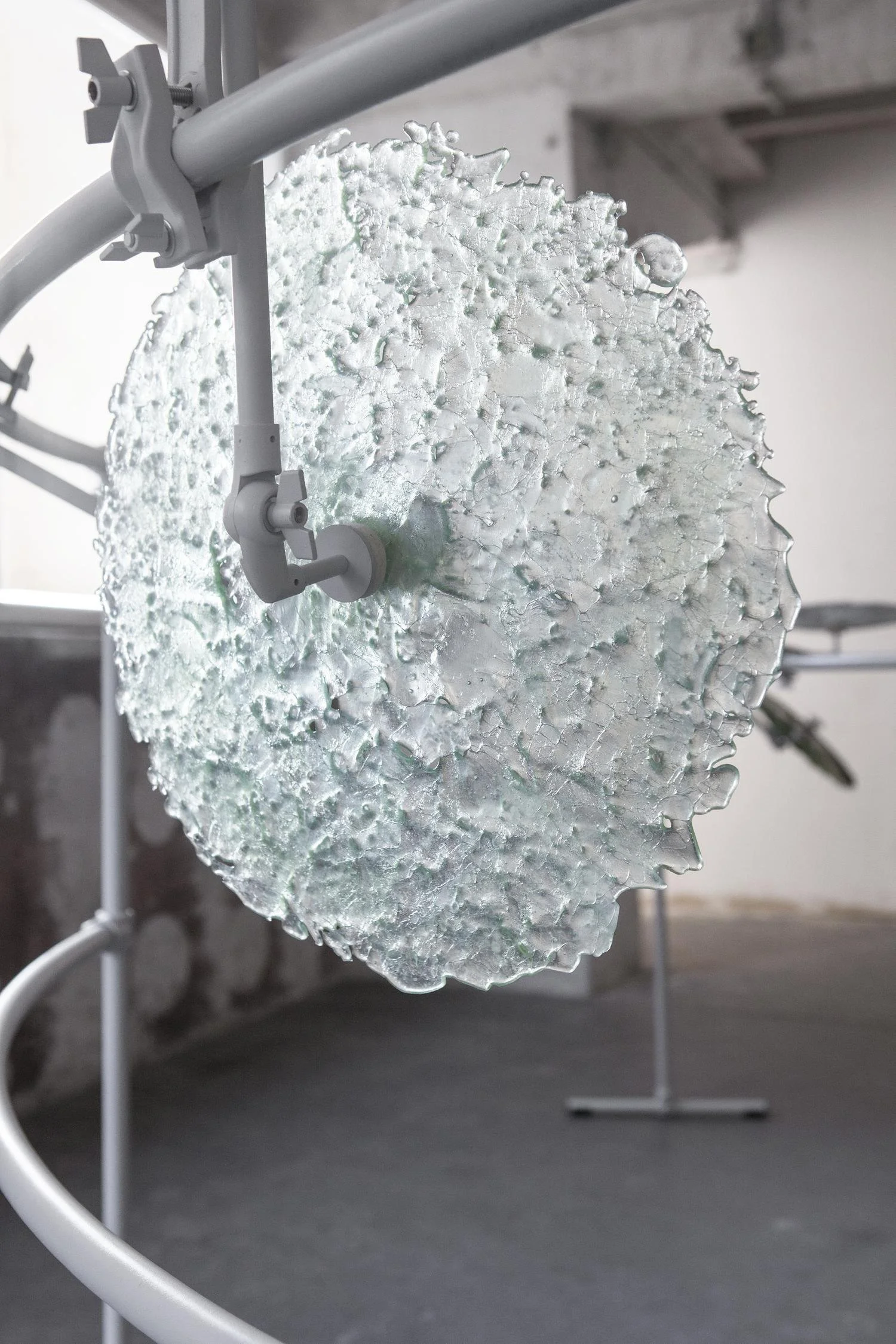
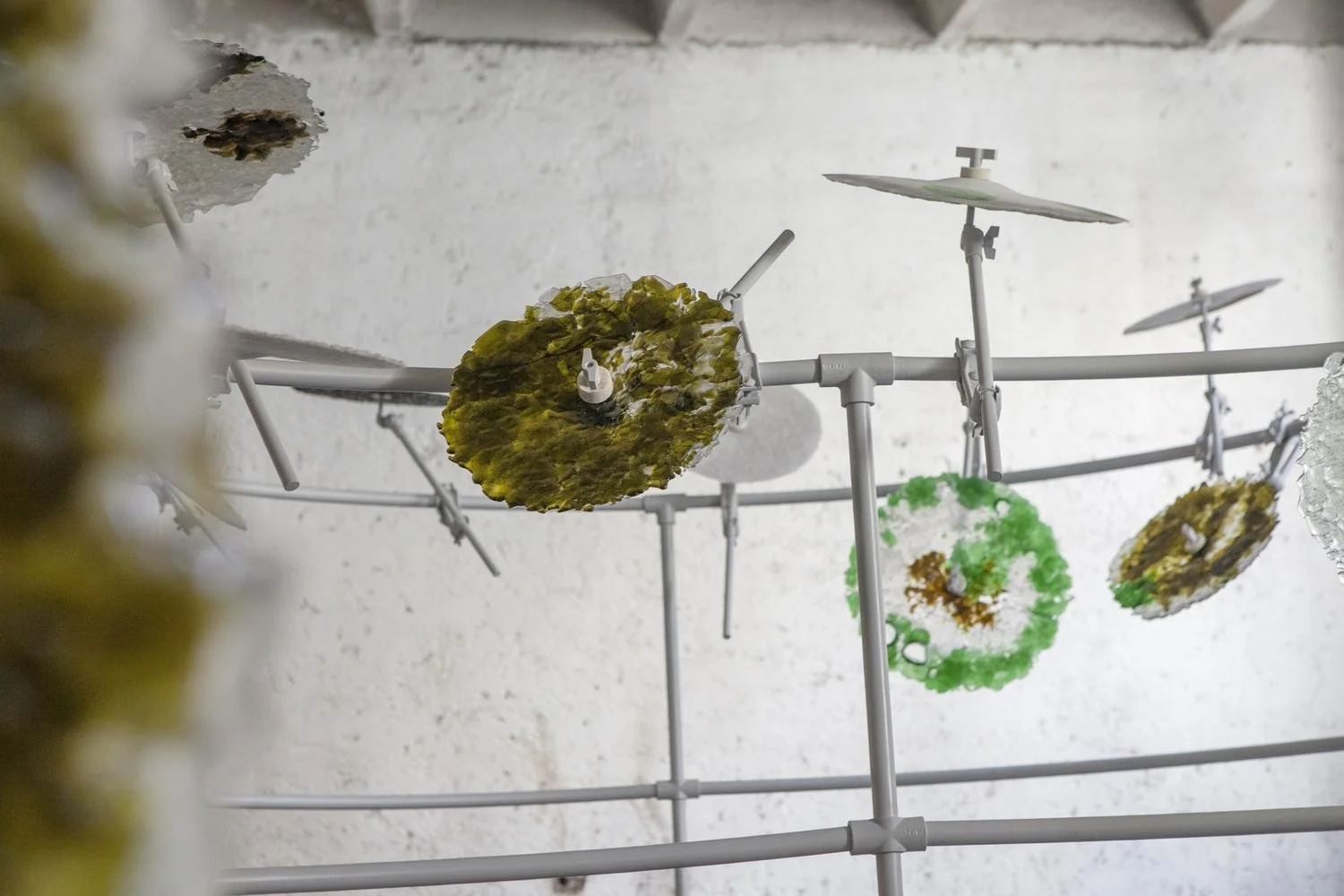
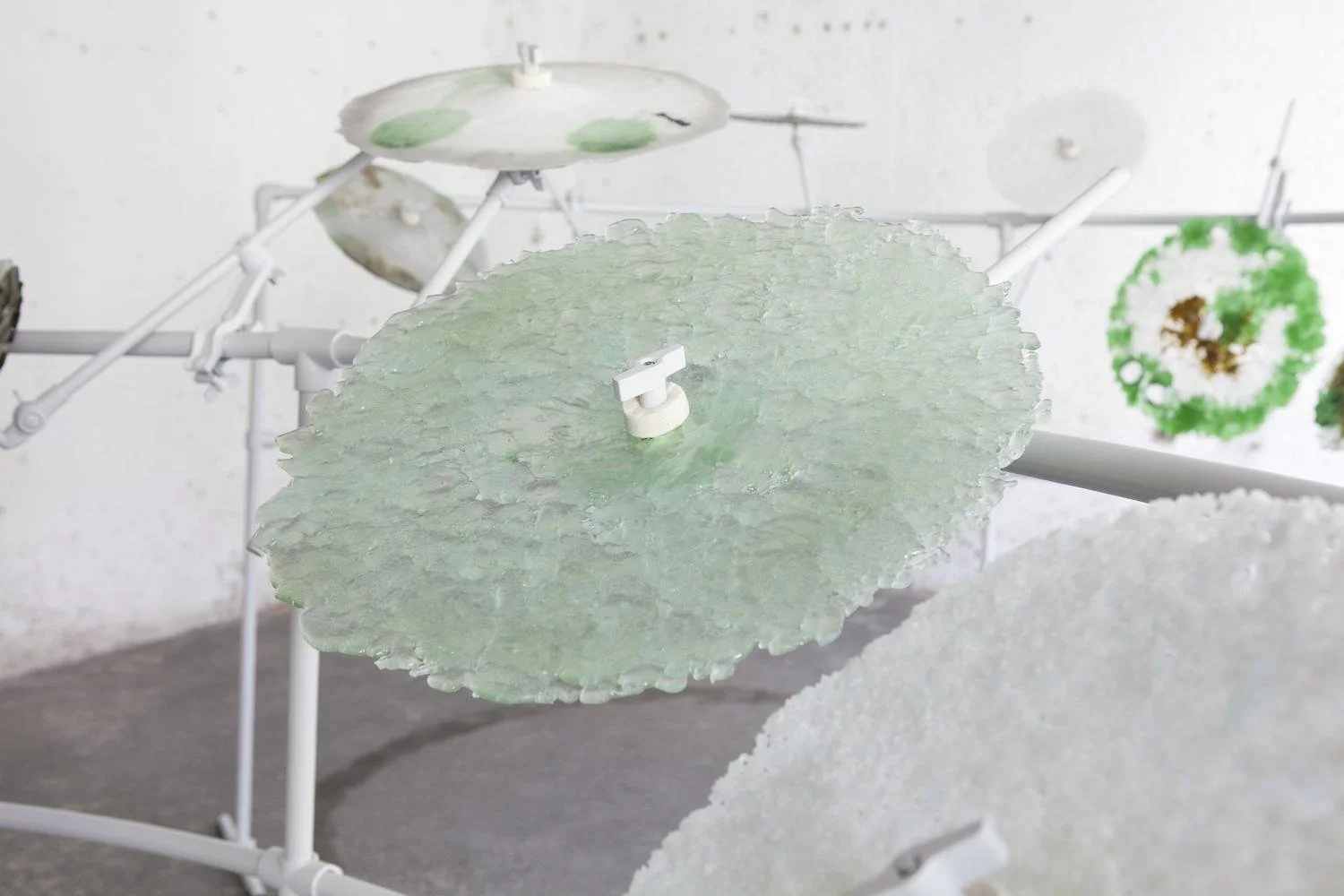
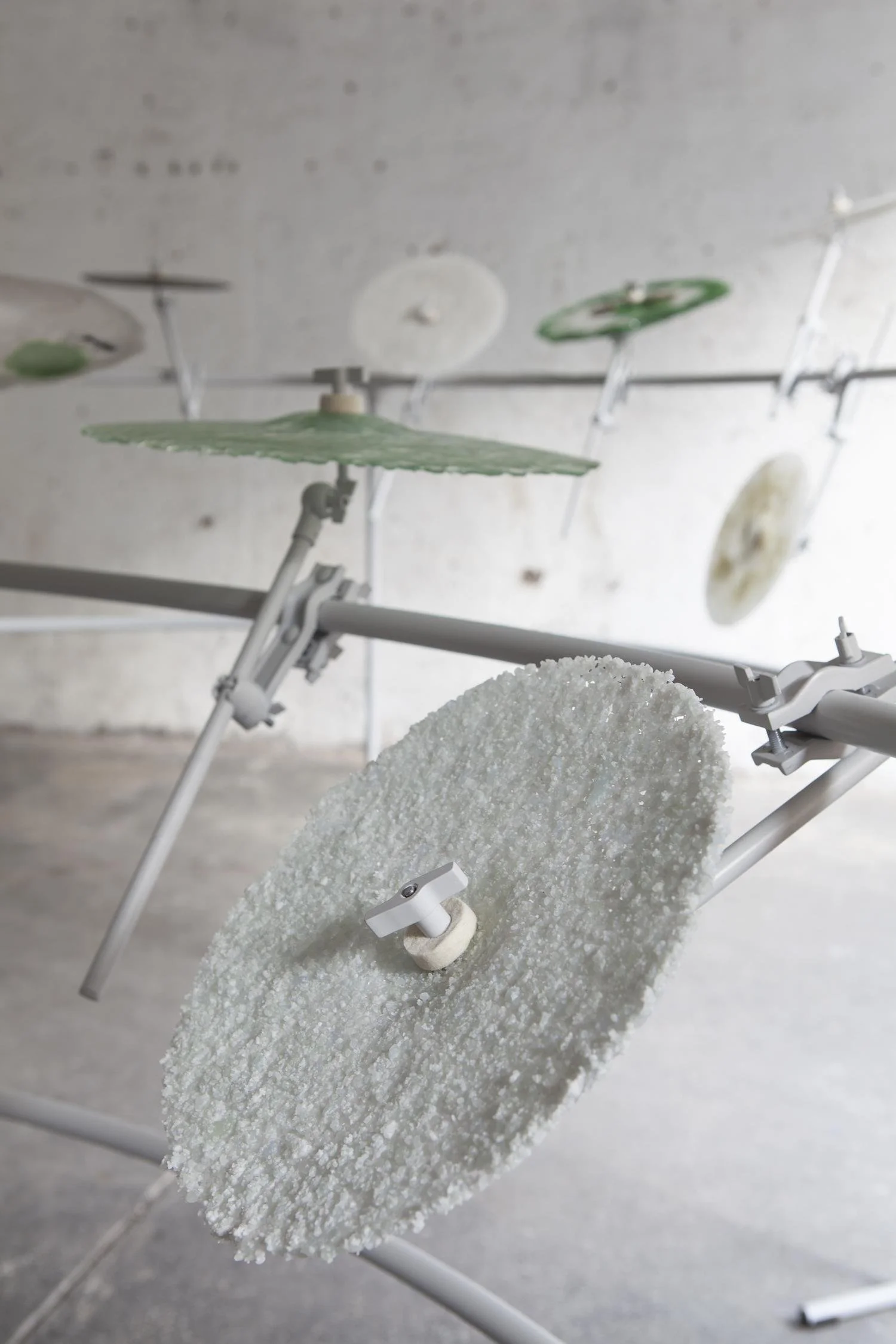
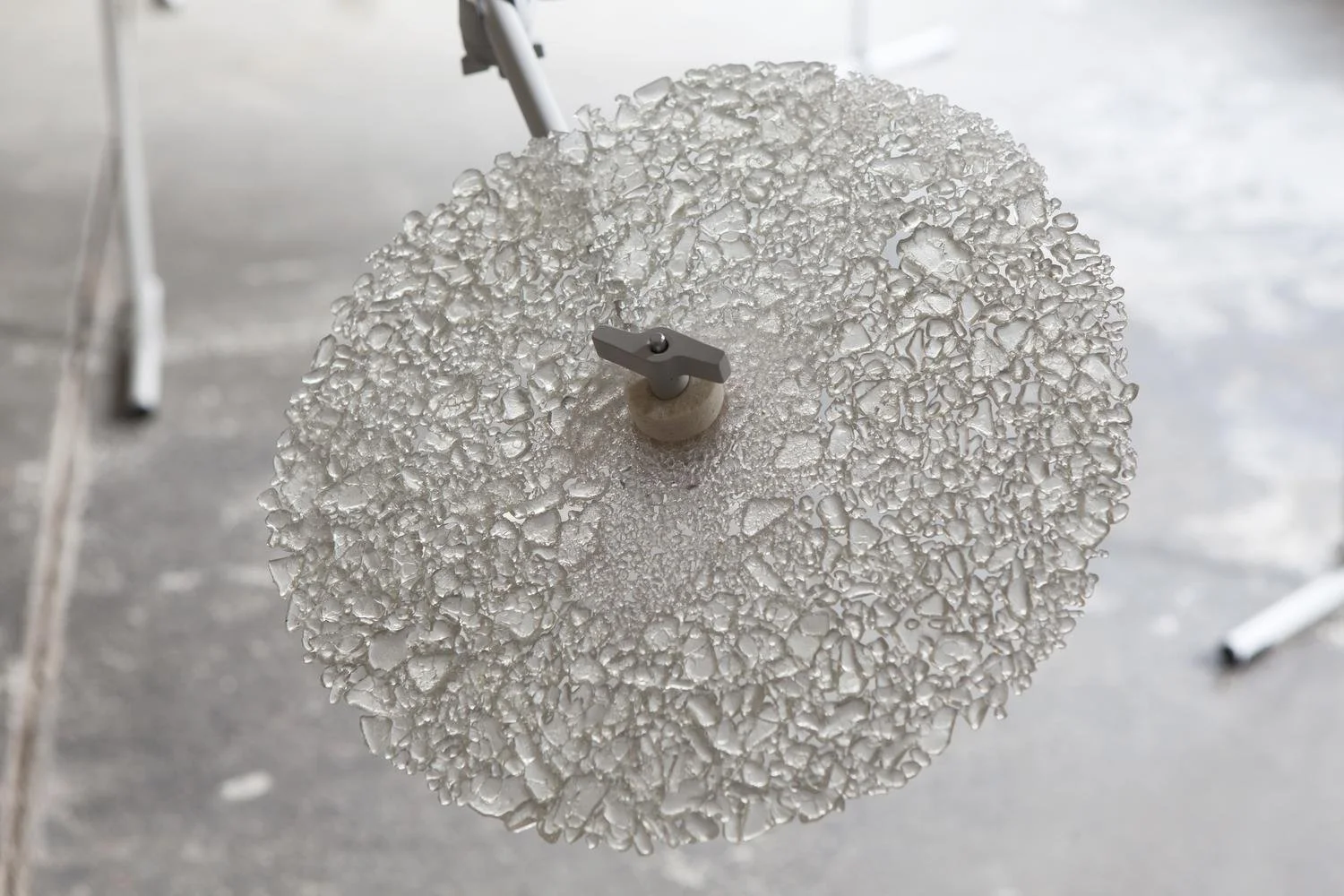
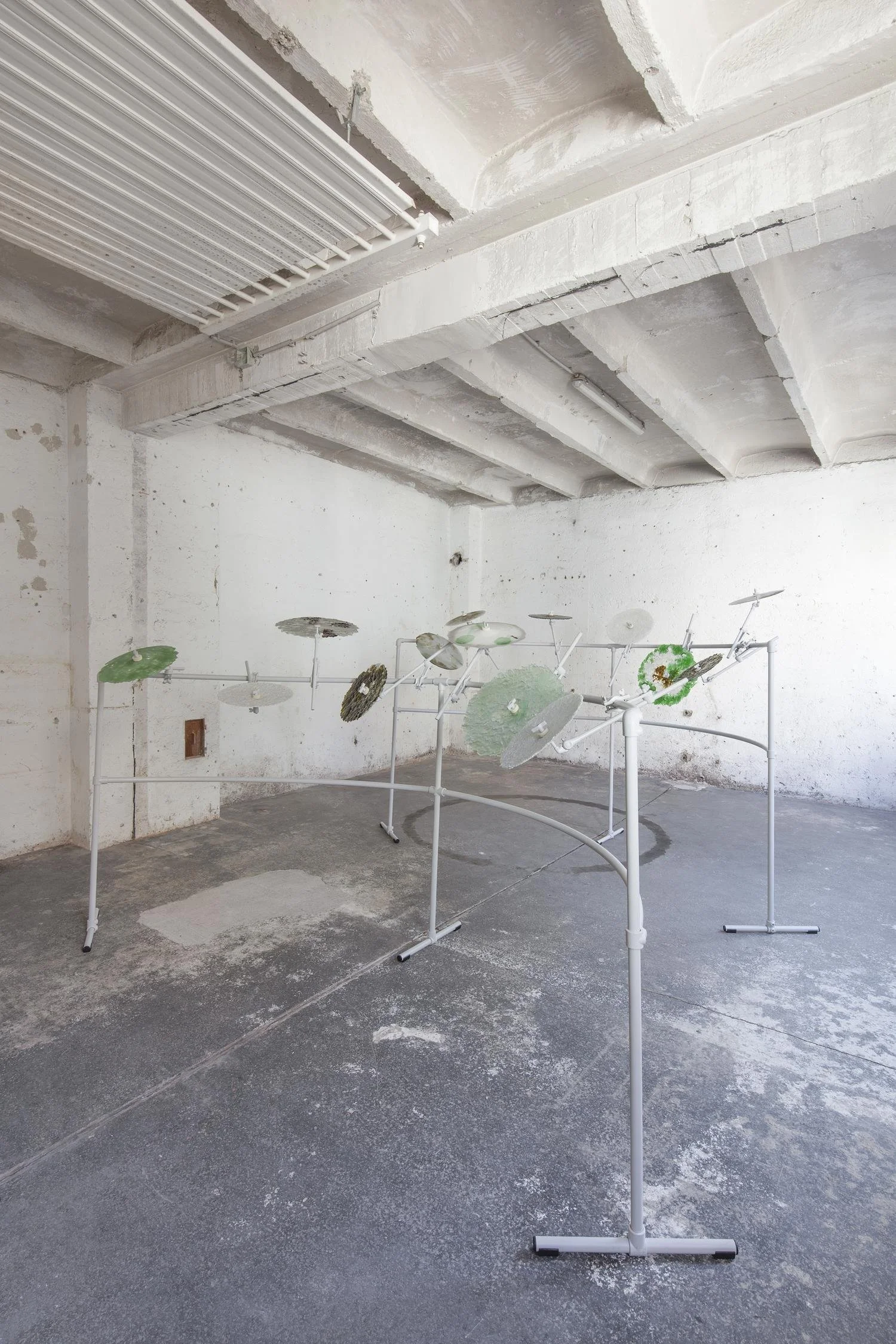
Glass occupies an in-between position in physics: with its irregular crystalline structure and special characteristics, the amorphous material lies somewhere between solid and liquid. Janine Schranz and Kristin Weissenberger have been exploring this unclassifiability for months. The starting point was the idea of building an experimental instrument: a drum set made of glass. In numerous trials, they tested different techniques for shaping cymbals from waste glass in a ceramic kiln.
Waste glass—seemingly endlessly available, yet marked by subtle, material-specific traits—moved to the center of their research: Why is there almost no perfectly transparent bottle glass, but rather "50 shades of transparent"? From a daily perspective, waste glass is nothing but trash; artistically, however, it is an inexhaustible raw material—an inversion of the usual logic of value.
It carries an inherent indeterminacy: neither solid nor liquid, but rather in a state of "supercooled liquid." This in-betweenness creates a particular tension, reflected also in the working process. Fragility and breakage were not seen as failure here, but as potential—used to create something new, a principle of "creative destruction" described already by Nietzsche and Benjamin.
From the initial impulse to elevate something as fragile as glass into a percussion instrument, to the necessary shattering of waste glass into fragments and granulates for kiln melting, to the "Archive of Broken Forms" documenting failed attempts, the process turned breaking into a practice of knowledge: breaking open to understand. The result is a room-filling instrument made of glass cymbals.
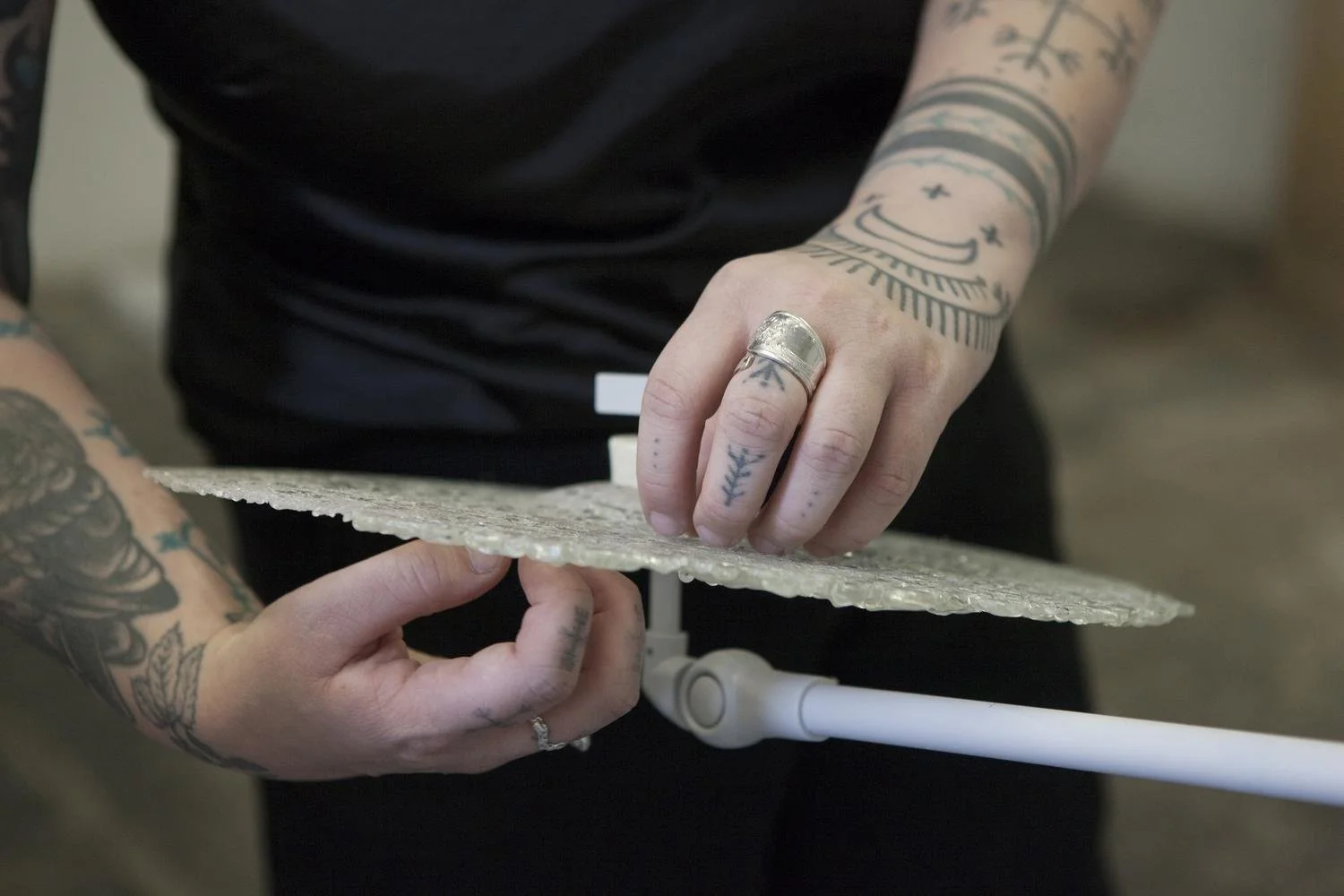
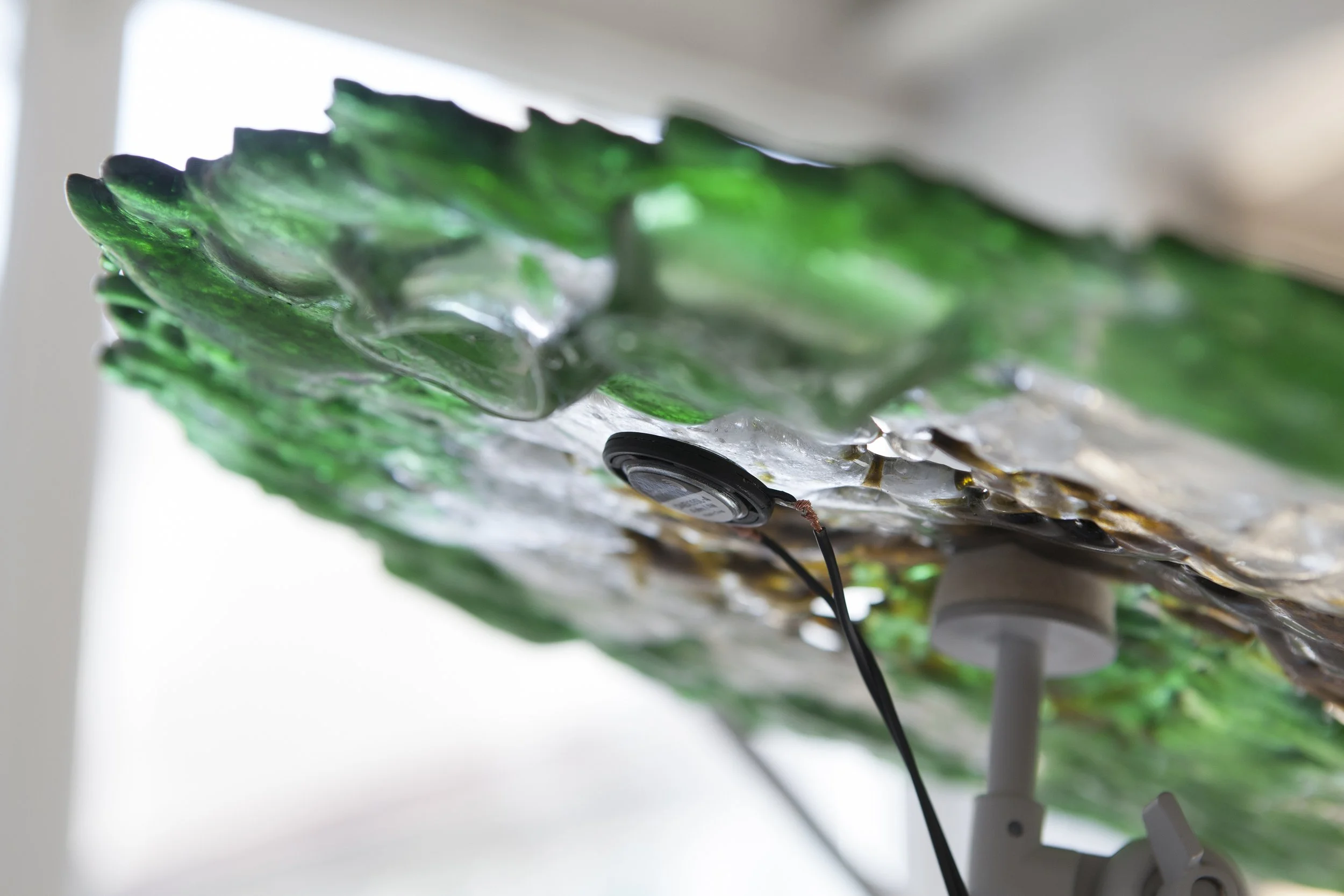
Zosia Hołubowska created a fixed media sound composition using transducer speakers and processed recordings of the instrument, as well as a live performance engaging with the sculpture with fingers, mallets, and a cello bow.